
Ocoee Address History Sources
No one record provides a full list of Ocoee previous residents. The current parcel card establishes the property identity. A deed chain names owners, while a directory or census can name the household at the same place. City permits help date the building and later work. Each source has a different time span and access path, so the strongest history comes from matching them rather than treating any one result as final.
| Source | Years Covered | Where Held | What It Shows |
|---|---|---|---|
| OCPA parcel card | Current roll and sales history; older rolls by request | Orange County Property Appraiser | Owner, situs, mailing address, parcel ID, deed links, building facts |
| Official Records | County books from 1843; online depth varies by series | Orange County Comptroller | Transfers, grantors, grantees, dates, liens, and legal descriptions |
| Polk regional directories | Verified Ocoee-inclusive editions for 1962, 1987, and 1990 | OCLS Downtown Florida collection | Named residents and businesses; reverse listings when an edition includes them |
| Federal census | Public schedules through 1950 | NARA and library databases | Household members, ages, birthplaces, and occupations |
| Ocoee permits | Current SAGE records plus requested archives | City Building Division | Address, work, applicant, contractor, dates, inspections, and status |
For a recent address, start with the OCPA Property Search. For an older household, keep the same legal parcel in view while checking directory editions and census years. That avoids attaching a family to the wrong house merely because a street name looks familiar.
Start Ocoee Previous Residents Here
The parcel card is the modern anchor. Search the physical address, called the situs address, and save the parcel identification number, subdivision, lot and block, current owner, owner mailing address, sales history, and most recent deed reference. Mailing and situs addresses are separate fields. A different mailing address may reflect a trust, estate, seasonal owner, or simple mailing choice. It does not identify who occupies the Ocoee property.
Legal descriptions are more durable than postal wording. Ocoee grew outward from the 1886 Town of Ocoee subdivision near Starke Lake, and later roads and annexations changed how places were described. The recorded lot and block can keep the trail joined when a postal city or familiar neighborhood name changes.
Key point. Homestead status supports owner occupancy, but it never supplies a complete list of past residents or household members.
Walk Orange County Deeds Backward
The Orange County Official Records search is the core ownership source. Search the present owner as a grantee, the person receiving property, and locate the acquisition deed that matches the parcel's legal description. Then treat the seller, or grantor, as the next person to research. Search that seller as an earlier grantee and repeat.
- Open the OCPA card and record the parcel ID, legal description, current owner, and latest instrument or book and page.
- Retrieve that deed in Official Records. Note the grantor, grantee, execution date, recording date, and exact land description.
- Search the grantor as a grantee in an earlier date range. Match the land, not just the surname.
- Repeat each transfer. Include probate deeds, trust transfers, plats, and estate instruments when they explain a break.
- When an image or index ends online, request the cited book and page by mail or at the Comptroller counter in Orlando.
- Grantor and grantee
- The grantor gives or sells an interest; the grantee receives it.
- Chain of title
- The linked sequence of recorded transfers for the same land.
- Legal description
- The subdivision, lot, block, or surveyed wording that identifies land in a deed.
The online index is free, but images can be withheld by redaction rules or series limits. Ordinary copies are $1 per page, and certification adds $2 per document. A custodian search costs $2 per name per year. The counter is at 109 E. Church Street, Suite 300, Orlando, and mail requests go to PO Box 38, Orlando, Florida 32802.
The captured Official Records index shows the search surface used for an Ocoee deed chain.
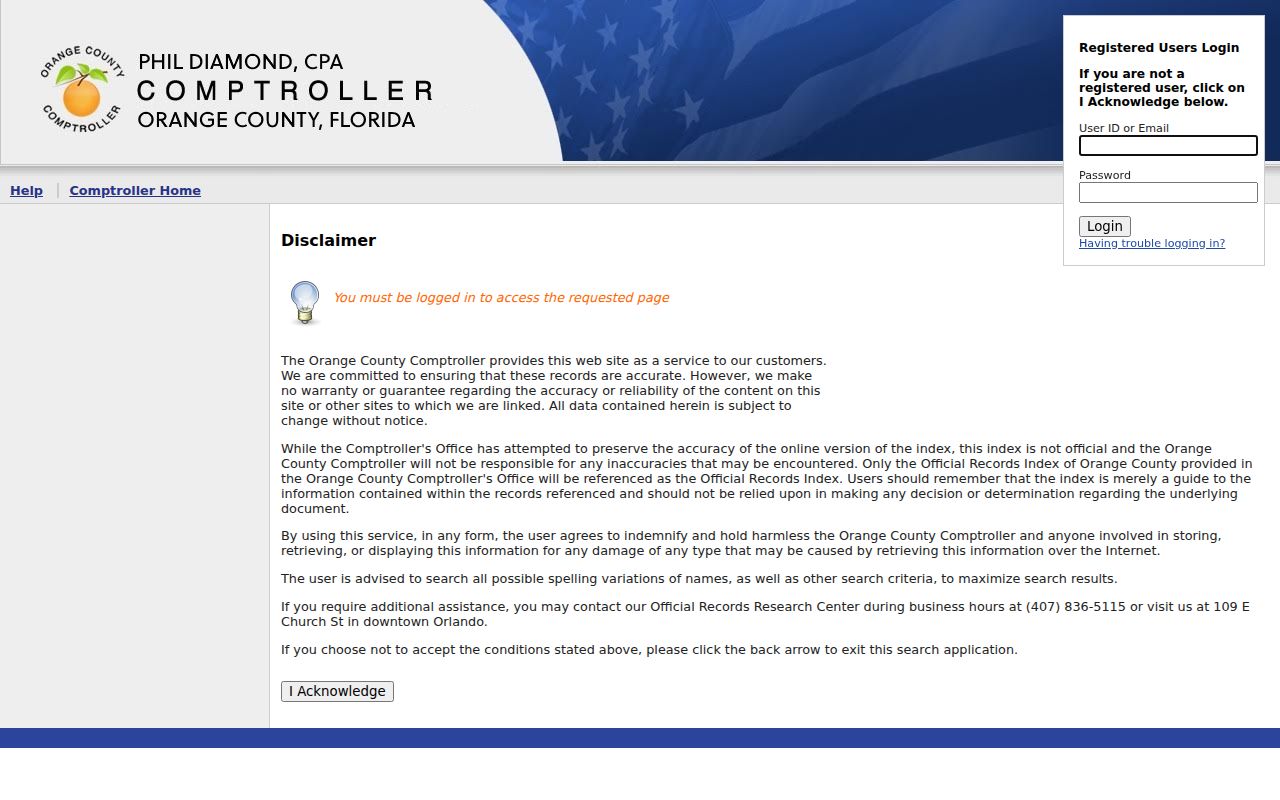
Party, date, document type, instrument number, book and page, and legal-description fields help separate one transfer from a same-name result.
When Ocoee's Online Index Stops
Orange County record books reach 1843, but that does not mean every image from every series is available online. Search depth varies. If a deed supplies a book and page but no image, contact the Comptroller Official Records Department by phone, mail, or in person. Ask for inspection when a certified copy is not needed. The office is open Monday through Friday, 7:30 a.m. to 4 p.m., and its published number is 407-836-5115.
Older Ocoee previous residents may appear first in Orange County land, tax, census, church, and newspaper records because the 1886 subdivision came before municipal recognition in 1923 and city status in 1925. There is no verified courthouse-fire loss that breaks this chain. Boundary changes and gaps between directory editions are the more likely cause of a missing link.
The Comptroller fee page documents copy and search charges before an in-person or mail request.
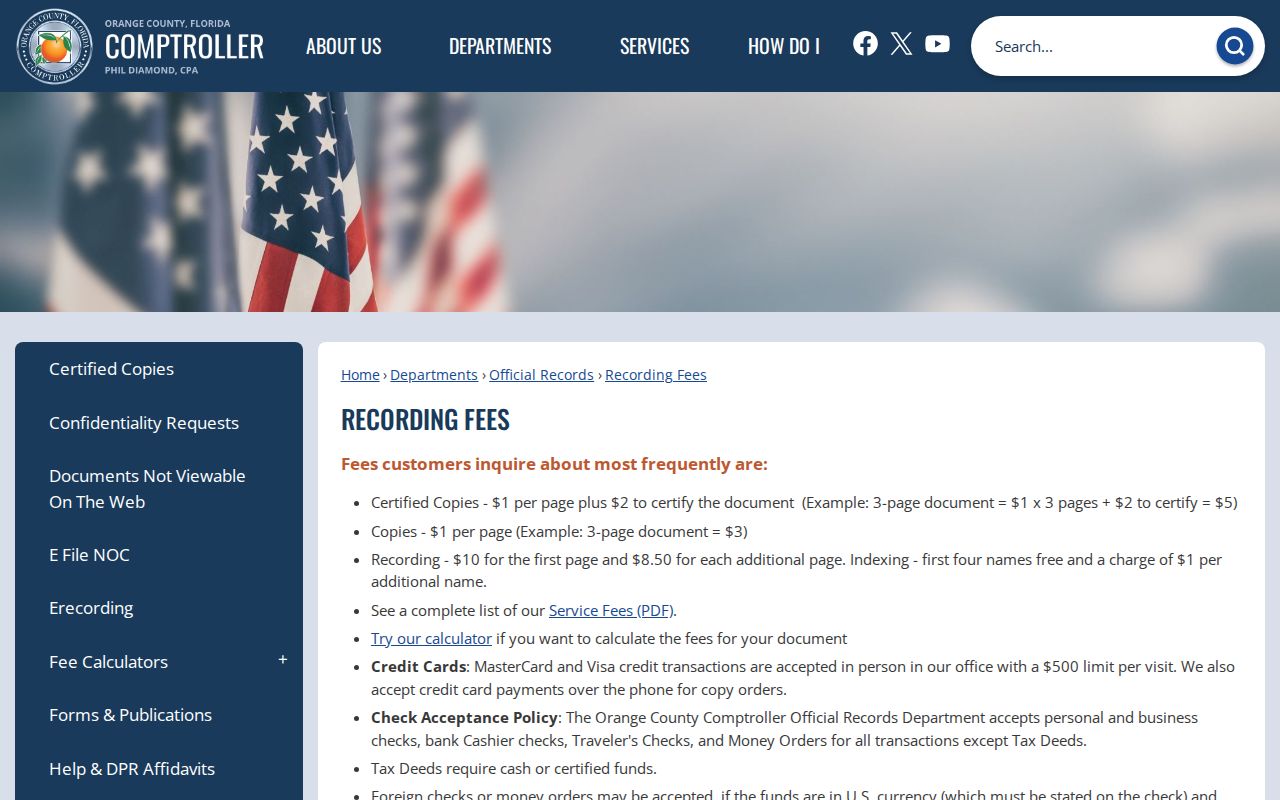
Check the current schedule before ordering because the fee page, not a third-party summary, controls what the office charges.
Note: A deed proves a property transfer, not that every named owner lived at the Ocoee address.
Match Ocoee Households Across Years
Ownership is only half the story. The verified Polk title is filed as a Winter Garden directory “including Oakland, and Ocoee.” Catalog-visible editions include 1962, 1987, and 1990. A volume may list a person by name, spouse, work, and home address. If its reverse section is present, it can be read by street and house number. The books are library-use-only in the OCLS Downtown fourth-floor Florida collection.
- Choose the directory year closest to a known deed, permit, birth, or death date.
- Record the exact name, spouse, address, occupation, and abbreviations from the entry.
- Check the reverse section, if included, for the same address and nearby households.
- Compare adjacent available editions to bracket when the person arrived or left.
- For 1950 or earlier, pair the result with the public census household schedule.
A missing entry does not by itself mean a move. It may reflect a spelling variant, a missed canvass, a change in the publisher's coverage, or a year when no verified Ocoee-inclusive edition is available. The Ocoee city directory collections page covers how these regional volumes are arranged and read.
Ocoee Permits Date Property Change
The Ocoee SAGE portal searches permits and inspections by address, permit number, or contractor. A result can show the applicant, contractor, parcel or address, work scope, valuation, dates, inspections, and status. That can explain when a structure was built, enlarged, reroofed, fenced, rewired, or otherwise changed.
A permit does not prove ownership or occupancy. It may name a contractor or applicant who never lived there. Use it as a date marker beside the parcel card and deed chain. If the needed permit predates online material, request the archive from the Building Division or City Clerk. Florida Public Records Law does not require a reason or special form; the request needs enough detail for staff to locate the file.
Connect Ocoee Estates and Heirs
A backward trail may end at an estate rather than a normal sale. Search Orange County probate dockets through my eClerk for a deceased owner, then compare public petitions or orders with deeds recorded from an estate or trust. Probate may identify a personal representative or heirs where the file is public. An obituary can add relatives and prior communities, but it remains secondary evidence until another record confirms the link.
Vital records follow their own access rules. Florida birth certificates less than 125 years old are confidential, and cause-of-death information is restricted for 50 years. Marriage and divorce abstracts from June 6, 1927 forward are held by the state, while underlying Orange County license and court files remain local.
The Florida vital-records gateway explains which office and certificate type fits the event.
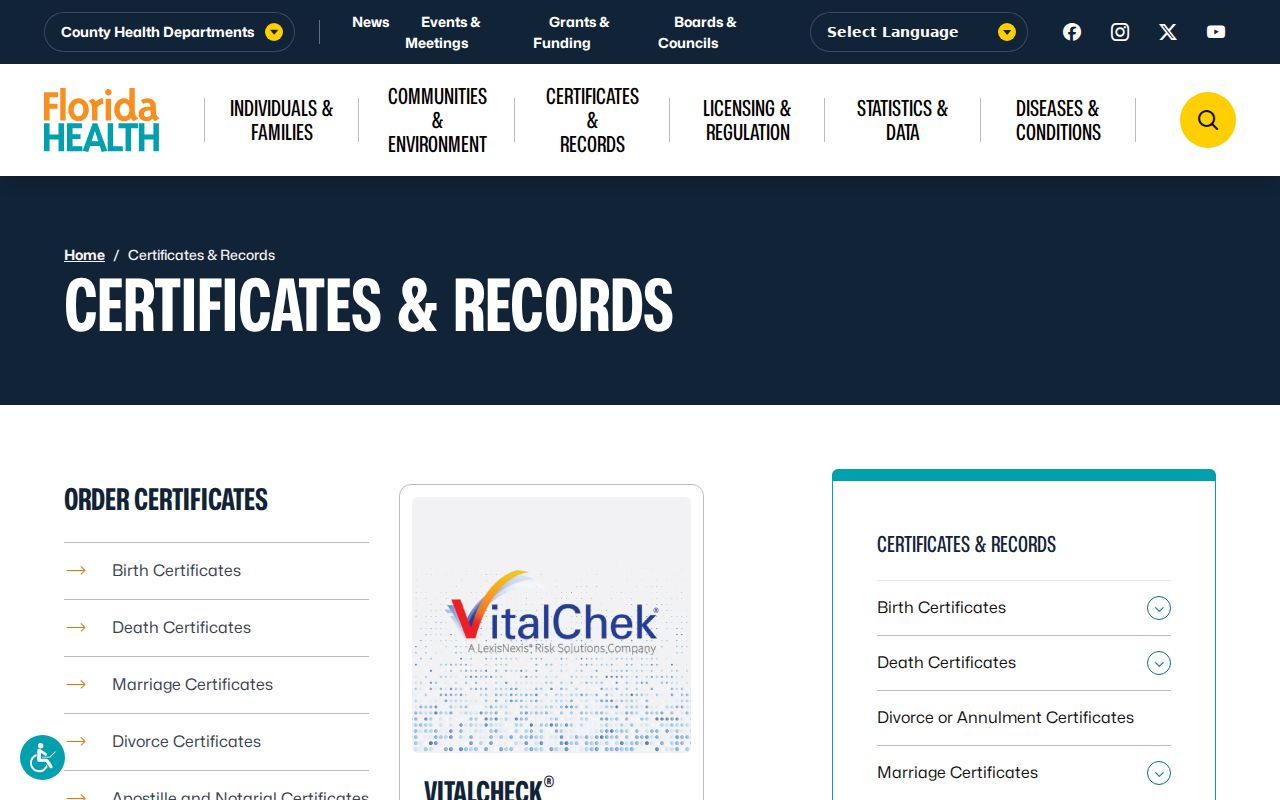
This source helps distinguish a state certificate abstract from the fuller county deed, license, probate, or court file.
The state's forms and applications index supplies the correct order paperwork.
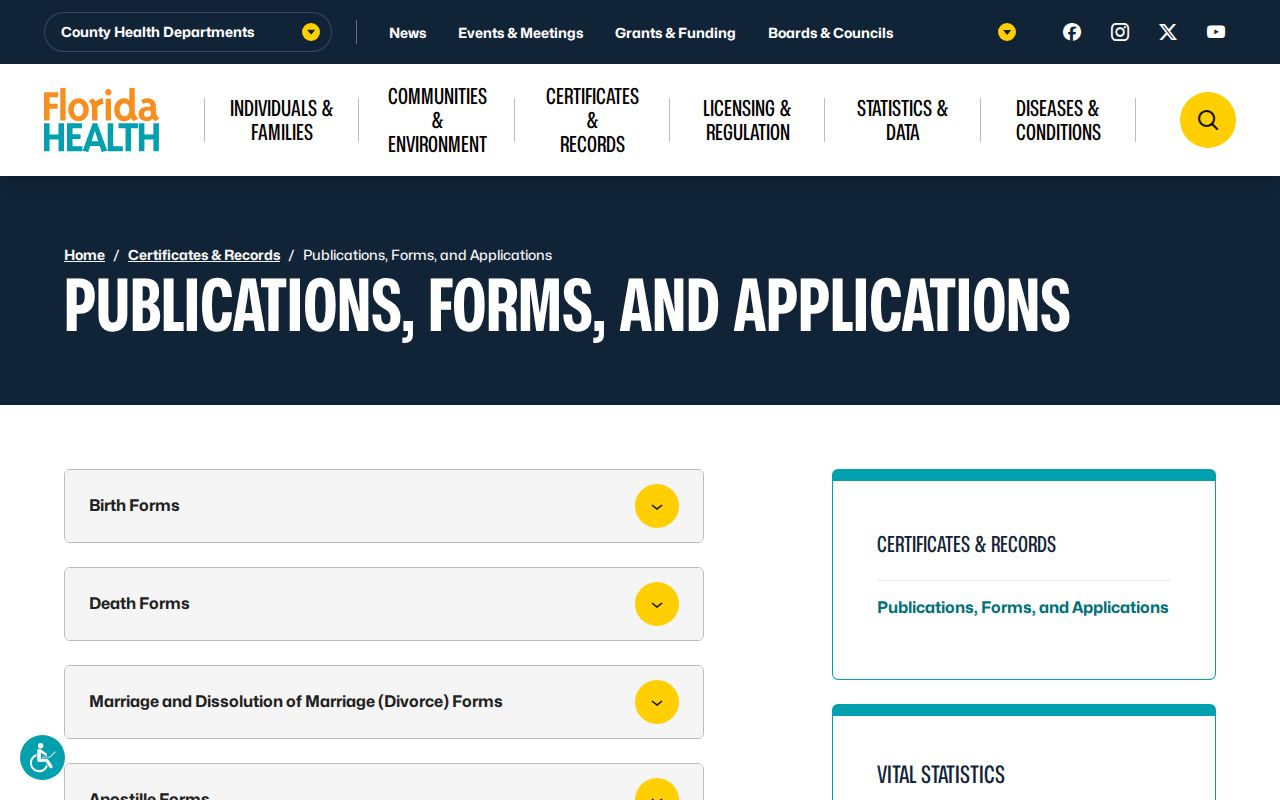
Read eligibility, identification, and supporting-document requirements before sending a certificate request.
Read Ocoee Absences With Care
Historical context matters when asking who lived here before. Early records may label a person by Winter Garden, Ocoee, or west Orange rather than the modern postal city. More gravely, the 1920 violence and expulsion of Black Ocoee residents created forced demographic breaks. A household that vanishes from later sources must not be described as an ordinary move without evidence. Pair deeds, census pages, newspapers, and authoritative archives.
The durable method stays the same: follow the land description, then add the people records for each era. That protects an Ocoee address history from assumptions based on one missing directory or one changed label.
Lawful use. Research Ocoee previous residents for house history, genealogy, estate work, or personal curiosity. Never use records to track, threaten, or harass a living person.